Skip to content

Next kiln loads Tue 18 Aug

Fired and shipped from Glostrup

Blank porcelain · three engraving methods · Glostrup

Your mark, fired in.

We do not sell finished designs. We sell the blank and the mark that goes into it — and we tell you first what each method survives, what each glaze does to the contrast, and which kiln your piece is going in.

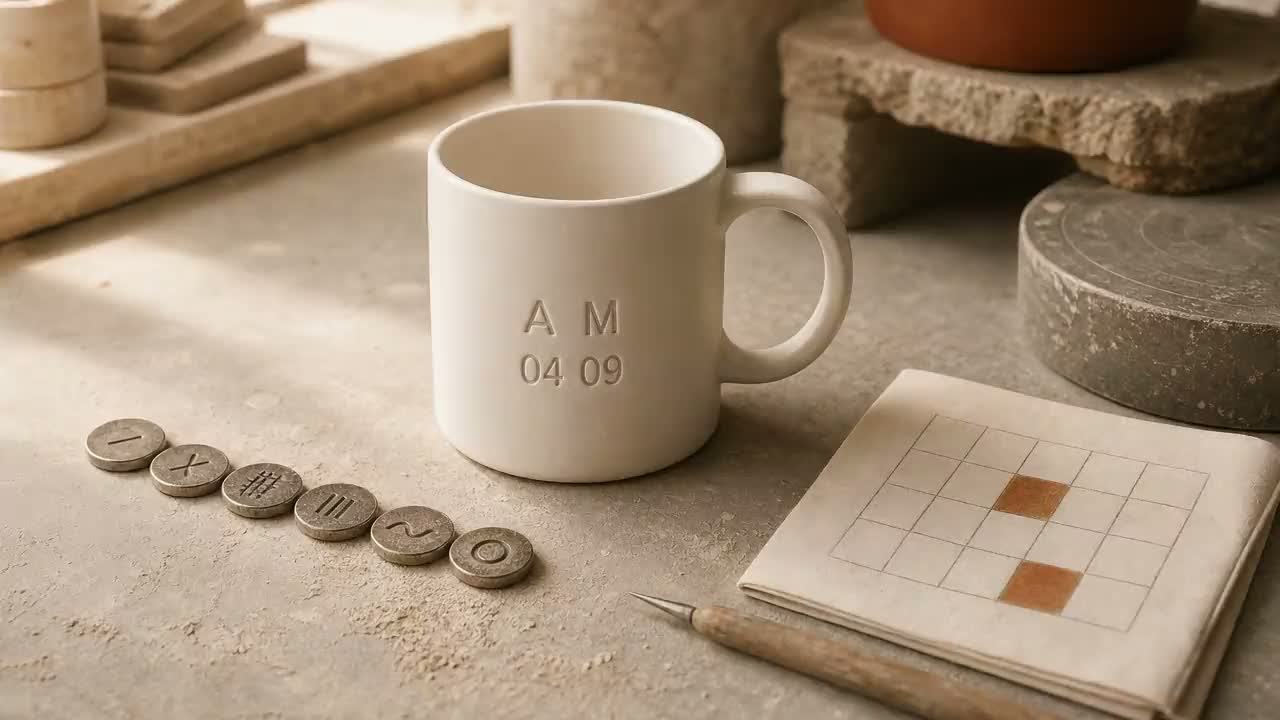
A workshop bench holding an engraved porcelain mug, a line of engraved process tokens and a paper kiln planner

Next kiln

Tue 18 Aug

Out of the kiln
24 August 2026
Estimated dispatch
31 August 2026

Dates follow the kiln, not a courier promise. A full kiln in December moves them out, and we say so rather than quietly missing them.

Price per piece

  • 1–5100%
  • 6–1193%
  • 12–2387%
  • 24–4781%
  • 48+75%

One order, one discount ladder. No membership, no subscription, no stored balance.

Blanks fromDKK 65incl. moms · engraving from DKK 55
Blanks
36across five ranges
Engraving methods
3each with its limits published
Kilns per week
2Tuesday and Friday
Cancel in full until
24 hbefore your kiln is loaded

01The one thing most sites leave out

Three ways to put a mark in porcelain. They do not wear the same.

Every custom ceramics shop will engrave your name. Very few will tell you that one of the three common methods gradually wears off in a dishwasher. Here is the difference, before you choose.

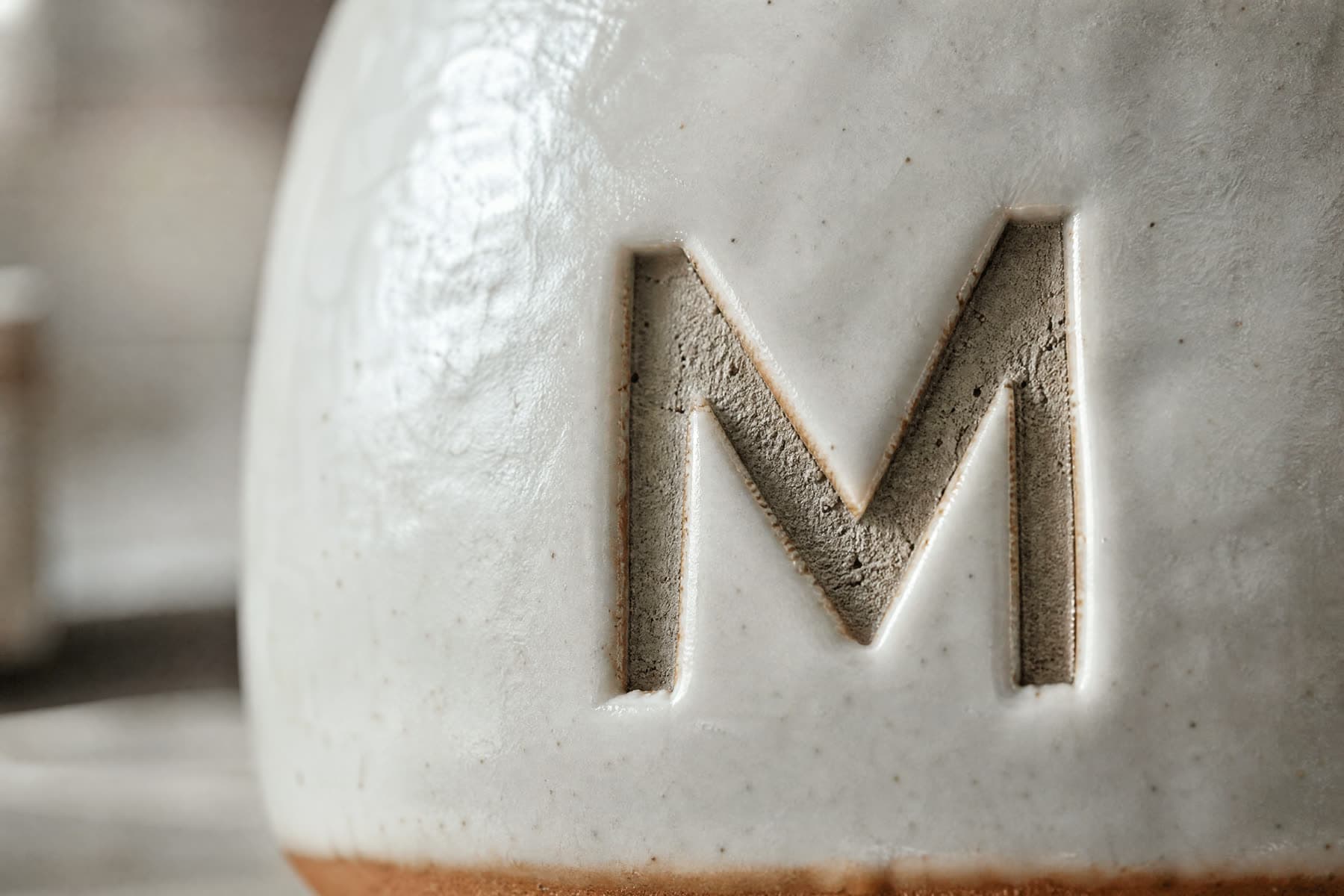
Macro view of a mark made by under-glaze on white porcelain01

Under-glaze

from +DKK 95

Beneath the glaze layer

Applied to the raw body, then glazed and fired over. It is the method to choose when the piece will be washed daily for years.

How it survives washing
The most durable of the three. The mark sits under the glaze, so dishwasher cycles wear the glaze, not the mark.
Min. glyph height
3 mm
Added lead time
+1 kiln cycle
What it looks like after 50 washes
Macro view of a mark made by laser etch on white porcelain02

Laser etch

from +DKK 55

Cut into the fired glaze surface

Cut after the final firing, so it needs no extra kiln cycle and turns around fastest. The finest of the three — it holds detail down to 1.5 mm.

How it survives washing
Durable — the mark is a physical groove, not a coating. The glaze is broken where it is cut, so the recess feels rougher than the surrounding surface and can hold traces of coffee or tea over time.
Min. glyph height
1.5 mm
Added lead time
+3 working days
What it looks like after 50 washes
Macro view of a mark made by on-glaze decal on white porcelain03

On-glaze decal

from +DKK 75

On top of the glaze layer

Printed and fired onto the finished glaze at a lower temperature. Choose it when colour matters more than wear resistance.

How it survives washing
The least durable of the three. It is a surface treatment: with repeated dishwasher use it will gradually wear and lose density. Hand washing extends its life considerably.
Min. glyph height
2 mm
Added lead time
+1 kiln cycle
What it looks like after 50 washes
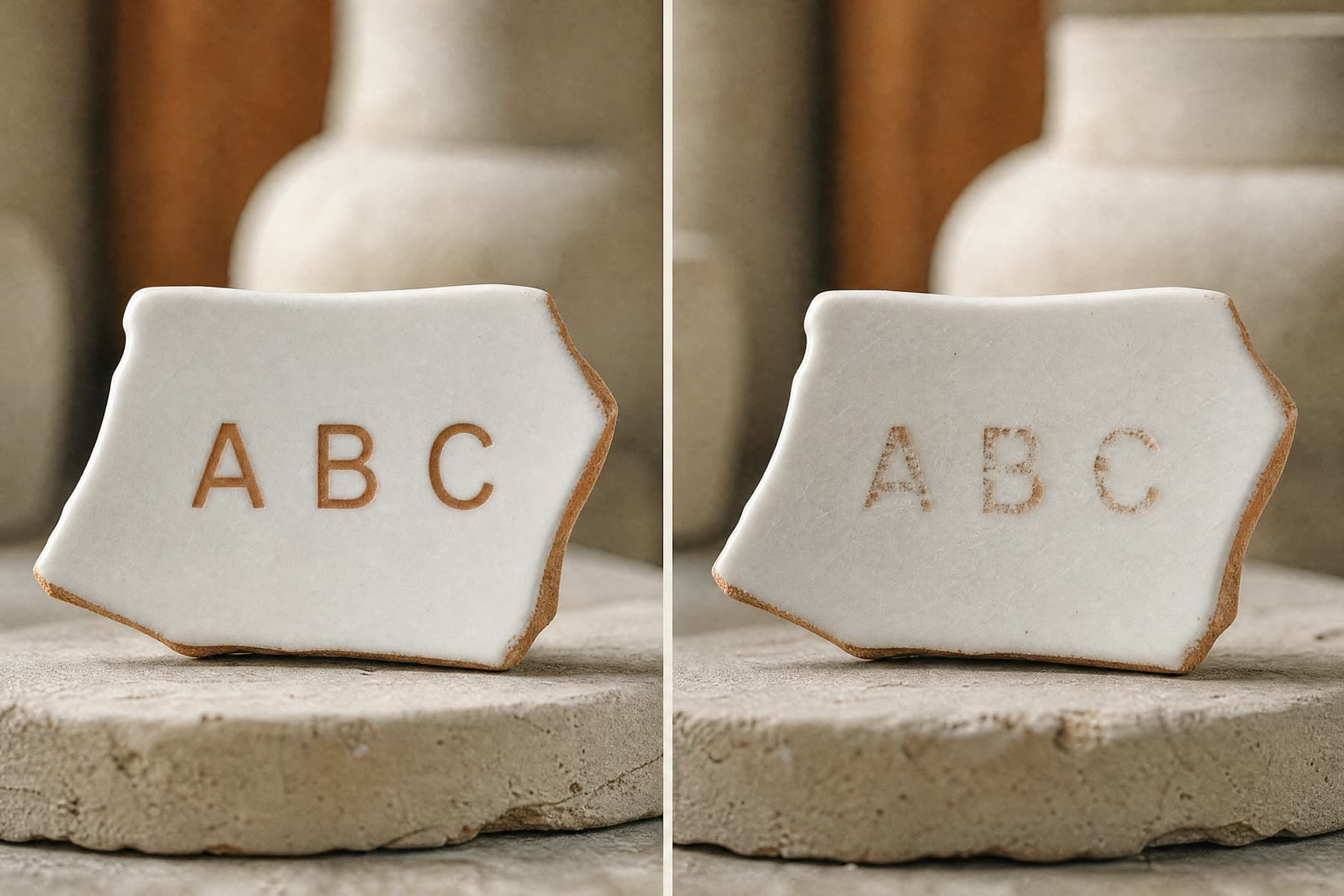
Two identical porcelain fragments carrying the same lettering side by side: the left crisp and new, the right visibly worn and faded after repeated washing

New · versus · 50 simulated dishwasher cycles

An on-glaze mark wears. We photograph it rather than describe it.

On-glaze decal sits on top of the fired glaze, so a dishwasher works directly on the mark itself. Under-glaze sits beneath, and the glaze takes the wear instead. Neither is better in the abstract — one gives you colour, the other gives you years. Pick against what the piece is for.

We do not describe any mark on this site as permanent, and we do not claim any of them never fade. Wear from an on-glaze decal is a property of the method, so it is not treated as a fault — which is exactly why we show it before you buy.

Compare all three methods

02Why we quote a kiln, not a courier

Ceramics is not made piece by piece. It is made kiln by kiln.

A kiln takes a day and a half to reach temperature and come back down, and it does not run half full. Your piece waits for the next load, and that load is what sets your date. We show you which one you are in.

  1. 1Bisque

    The raw piece is fired once to make it hard enough to handle.

  2. 2Mark

    Under-glaze marks go on now, straight onto the bisque body, before any glaze.

  3. 3Glaze

    Dipped, wiped back at the foot, left to dry.

  4. 4Glaze firing

    To 1260 °C and back down. This is the firing that fixes an under-glaze mark permanently under the glass layer.

  5. 5Etch or decal

    Laser etching and on-glaze decals happen after this point — a decal needs one more, cooler firing.

  6. 6Check & pack

    Every piece is measured and inspected, then packed for fragile transit.

We load two kilns a week, on Tuesday and Friday. In December and through the wedding season the kilns fill earlier in the week and dates move out. When that happens we move the date and tell you — we do not hold a date we cannot keep.

03Five ranges of blanks

Pick the body first. The mark comes after.

Each blank publishes its capacity, its outer dimensions, its weight, the area you can actually mark, and which methods it takes. Where a method is not offered on a piece, the reason is printed next to it.

04One order, one ladder

The unit price falls with the count. Every rung is published.

This is a quantity discount inside a single order — not a membership, not a subscription, and not a balance you top up. There is nothing recurring anywhere on this site.

Unit price by quantity, worked through on one Café Stacking Cup 160 ml with Laser etch engraving
PiecesBlankEngravingPer pieceSaved per piece
1–5DKK 95DKK 55DKK 150
6–11DKK 88DKK 51DKK 139DKK 11
12–23DKK 83DKK 48DKK 131DKK 19
24–47DKK 77DKK 45DKK 122DKK 28
48+DKK 71DKK 41DKK 112DKK 38

Worked through on a Café Stacking Cup 160 ml with Laser etch engraving, at DKK 150 per piece at the single-piece rate. Every price includes 25% Danish moms. The same ladder applies to every blank and every method; the configurator shows your own figures as you change the count.

06Kiln Studio

Start a piece — see the price and the kiln date as you go.

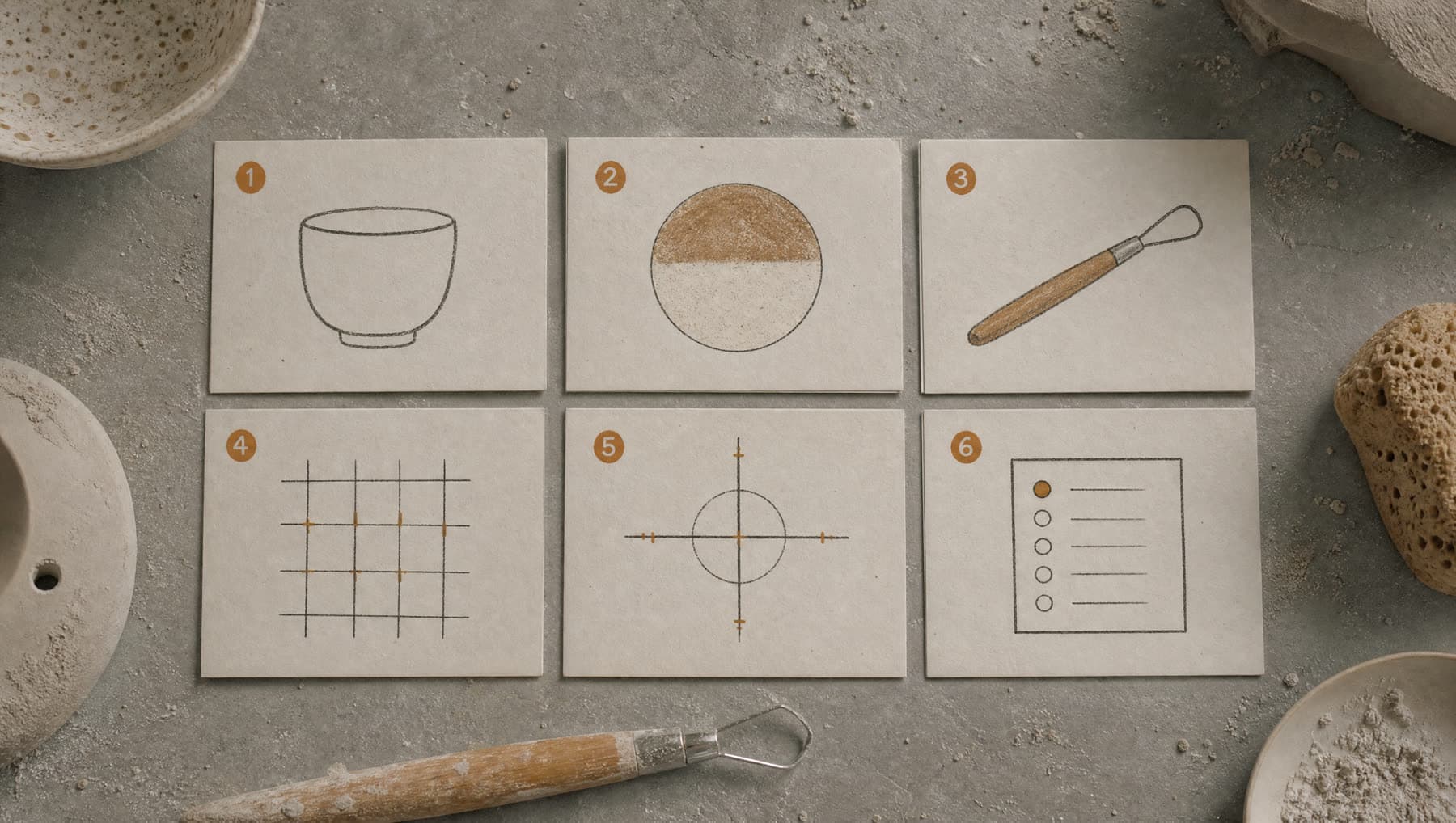
Six steps. The count moves the price, the glaze moves the contrast, the method moves the date, and the panel size caps how much text will physically fit. Nothing is hidden until checkout.

  1. 1Blank

    Body, capacity and the panel you get to work with

  2. 2Glaze

    Five glazes, each shown against all three methods

  3. 3Method

    Filtered by the blank and the glaze you picked

  4. 4Mark

    Text or your own artwork, counted against the area

  5. 5Placement

    Dragged, or typed in millimetres if you prefer

  6. 6Review

    Price, kiln date and cancellation deadline

Open Kiln Studio
Six numbered index cards laid out on a workshop bench, each carrying a hand-drawn diagram of one configuration step

05Food contact materials

Anything that holds food is regulated. Here is what applies, and to which piece.

Every cup, plate, bowl and pot on this site is a food contact article under EU Regulation 1935/2004. Ceramic articles additionally sit under the lead and cadmium migration limits of Directive 84/500/EEC — and which limit applies depends on the shape of the piece.

Flat article

Not fillable, or fillable to a depth of 25 mm or less

Lead (Pb)
0.8 mg/dm²
Cadmium (Cd)
0.07 mg/dm²

Hollow article

Fillable to a depth of more than 25 mm

Lead (Pb)
4.0 mg/L
Cadmium (Cd)
0.3 mg/L

Not a food contact article

Supplied as a decorative object and not intended to touch food

Lead (Pb)
Not applicable
Cadmium (Cd)
Not applicable

One blank in the range — the Memory Tile — is supplied as a decorative object and is labelled as not intended for food contact. It is the only one.

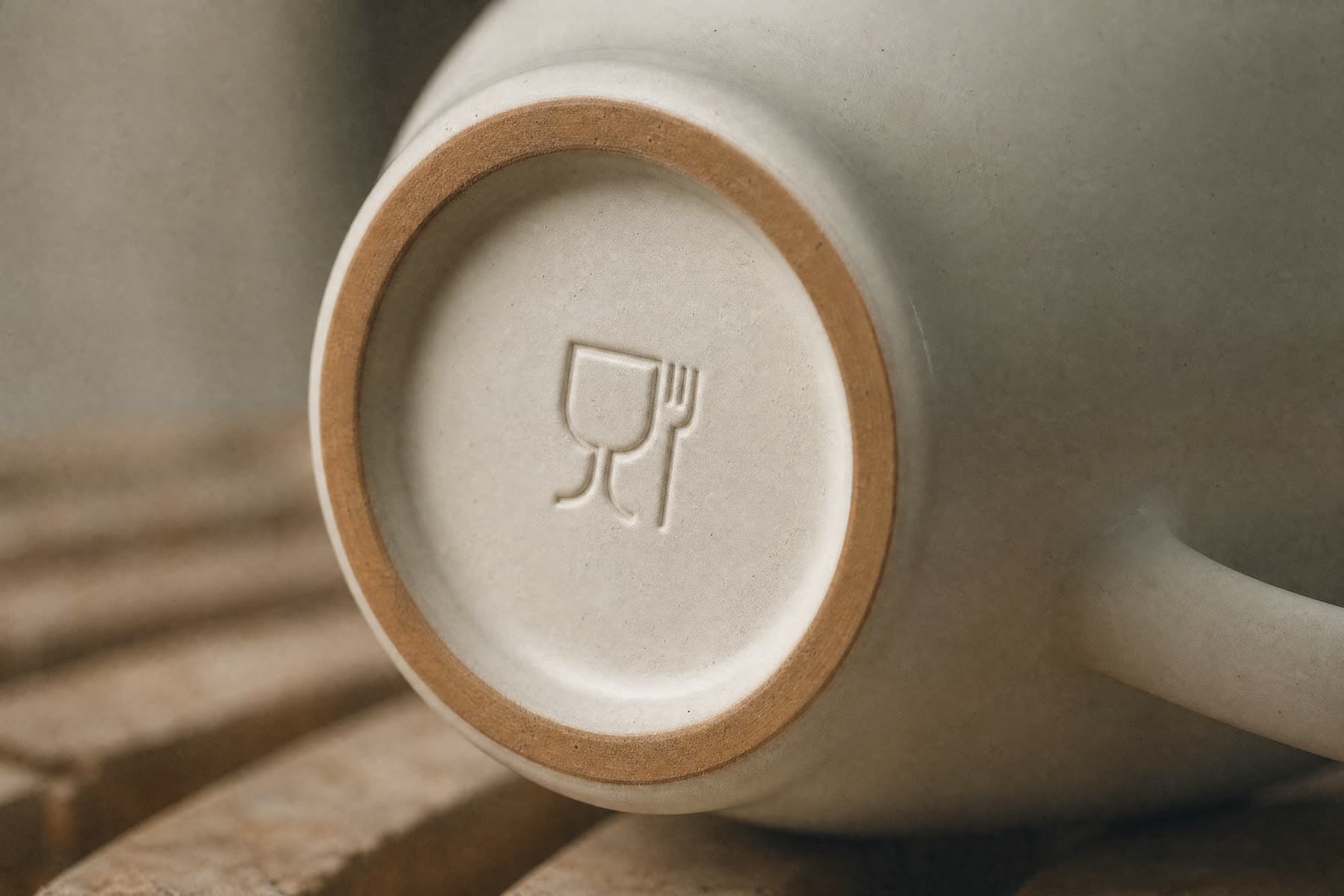
The underside of a porcelain cup showing an impressed wine glass and fork food contact symbol
  • Declarations of conformity. Every food contact blank carries a supplier declaration of conformity and states its glaze type on its own product page. Ask and we send you the document for the piece you are buying. Any blank missing either of those is not published here — the site will not render it.
  • Metallic finishes. One keepsake set carries a hand-applied lustre band. Metal in a microwave arcs, so that piece is marked as never microwave-safe, and that marking cannot be turned off anywhere in the ordering flow.
  • Thermal shock. Avoid sudden temperature change. Do not pour boiling water into a cold piece, do not move a piece from a hot oven onto a cold surface, and do not put a hot piece under cold water. Sudden change can crack ceramic.
  • Handmade tolerance. Dimensions and glaze colour vary by up to ±5% between pieces. Pinholing, speckle and slight colour movement are how a fired glaze behaves — they are characteristics of the material, not faults.
Materials & safety in full

What you can have engraved

  • Names, initials and monograms
  • Dates and numbers
  • Short lines of text
  • The name of your own shop, café or studio
  • Simple geometric motifs
  • A logo you own or hold a written licence to use

What we will not engrave

  • Registered trade marks and brand logos belonging to anyone else
  • Football club crests and university coats of arms
  • Currency, banknote imagery, official seals and government emblems
  • The likeness of a person who has not agreed to it
  • Copyright-protected artwork, illustrations, photographs and typefaces you do not hold a licence for
  • Content that is unlawful, or that targets a person or group

Every uploaded file is reviewed by a person before anything is fired. Nothing enters a kiln without that approval. If we reject something we tell you why and refund in full. The full rules.

What this shop is

Fired, not printed. Limits stated upfront. The kiln sets the date.

36 blanks and 3 engraving methods, made and marked in a workshop in Glostrup. We publish the wear, the contrast, the tolerance and the schedule because those are the four things that decide whether you will be happy with the piece a year from now.

Talk to a person

Ask before you order. It is cheaper than remaking.

If you are unsure whether a line fits, whether a glaze will carry your mark, or whether the kiln can make a date, write or call. We would rather answer first than fire the wrong thing.

Hours
Monday to Friday, 09:00–16:00 CET
Reply time
We answer email within one working day.
Workshop
Sydvestvej 129 A, 2600 Glostrup, Denmark

Delivery & returns

Every piece is packed for fragile transit and shipped from Glostrup. Delivery cost and estimated transit time are shown in full before you confirm — never added afterwards.

Delivery, breakage and returns →

If it arrives broken

Photograph the parcel and the piece and email us within 7 days of delivery. We remake or refund it. This applies to engraved pieces exactly as it does to plain ones.

Your two-year right to complain →
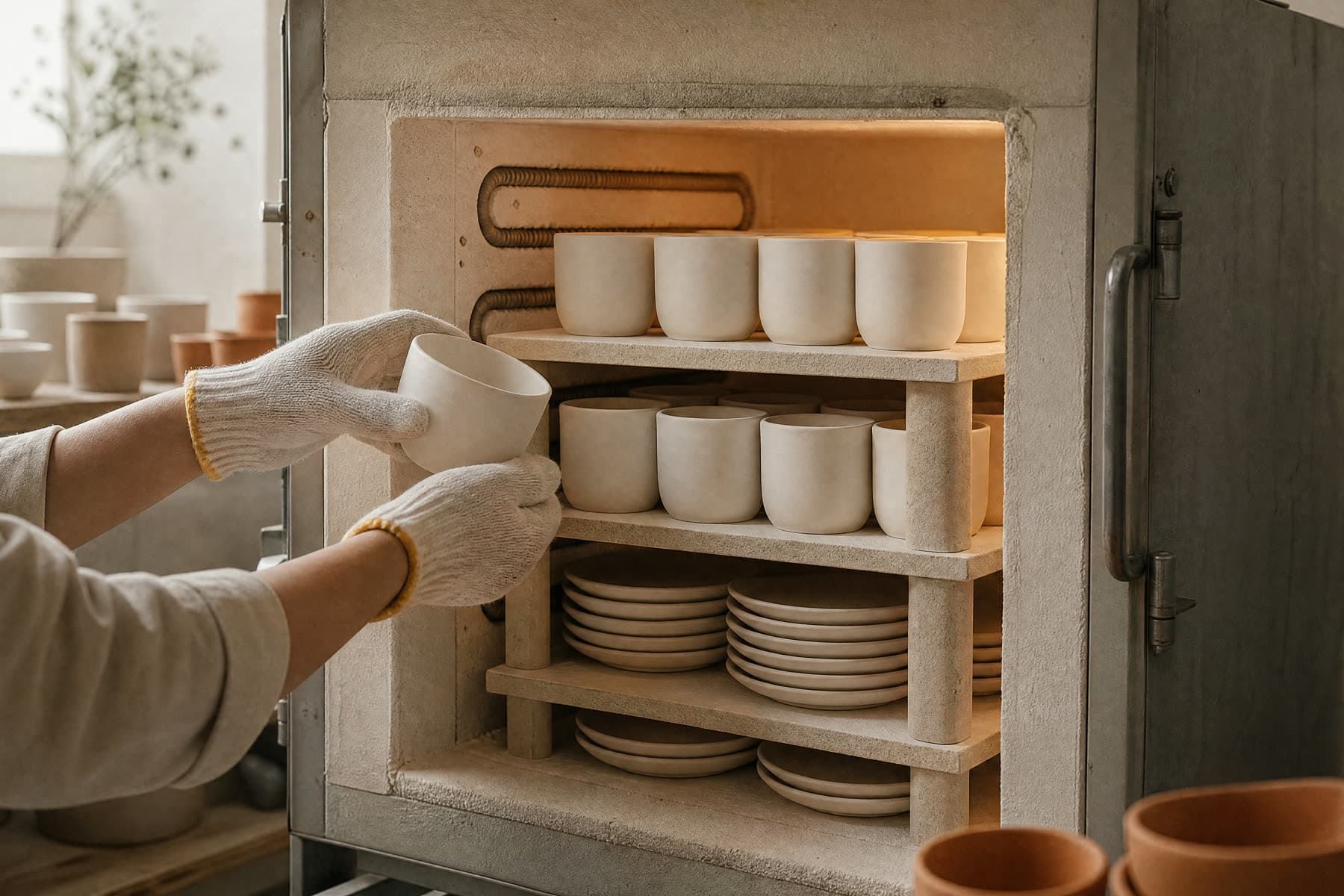
Gloved hands packing rows of white porcelain cups onto the shelves of an open front-loading kiln

Paying

  • Visa
  • Mastercard
  • Dankort
  • MobilePay

Charged once, at the point you confirm the order. Card details go straight to a PCI DSS certified payment provider over HTTPS — we never store or see the full card number.